Thermal Analysis of Additive Manufacturing (3D Printing) Filaments
Introduction
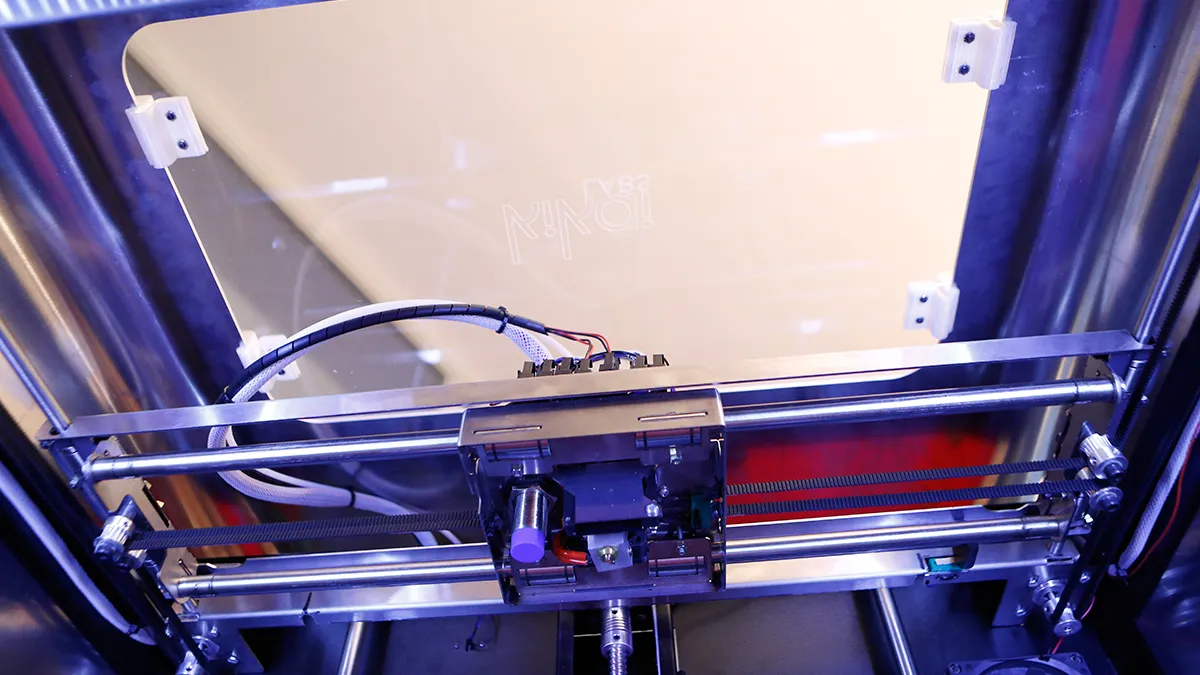
Additive Manufacturing—more commonly known as 3D printing—has transitioned from a hobbyist's tool to a fundamental pillar of industrial production. Whether it is printing a biocompatible medical implant or a lightweight aerospace bracket, the success of the 3D print is entirely dependent on the thermal behavior of the raw material.
In Fused Deposition Modeling (FDM), a thermoplastic filament is melted, extruded through a microscopic nozzle, and rapidly cooled. If the material's melting point, glass transition, or degradation temperature is off by even a few degrees, the print will fail due to poor layer adhesion, warping, or nozzle clogging. To guarantee "first-time-right" manufacturing, engineers rely on DSC and TGA to characterize every batch of filament.
Mapping the "Printability Window" with DSC
Differential Scanning Calorimetry (DSC) is the most critical tool for determining the ideal printing temperatures for any given filament.
- The Melting Point ($T_m$): The DSC identifies the exact temperature where the polymer crystals melt. The extrusion nozzle must be set 10°C to 20°C above this point to ensure the material flows smoothly without clogging.
- Glass Transition ($T_g$): This defines the "warping limit." If the 3D printer's heated bed is not kept at or above the $T_g$, the part will cool too quickly and shrink, pulling away from the build plate.
- Crystallization Kinetics: 3D printing is a high-speed cooling process. DSC measures how fast a material crystallizes. If it crystallizes too slowly, the layers won't solidify fast enough to support the next layer, leading to a sagging, "melted" appearance.
Ensuring Thermal Stability with TGA
Thermoplastics like PLA, ABS, and especially high-performance PEEK, begin to chemically degrade if held at high temperatures for too long. If a filament sits in a hot printer nozzle during a pause, it can start to decompose, releasing toxic fumes and leaving carbonized "char" that permanently ruins the nozzle.
Thermogravimetric Analysis (TGA) determines the "Maximum Safe Extrusion Temperature." By heating the filament up to 600°C, the TGA identifies the exact point where the polymer loses mass. For an industrial printer running a 48-hour print cycle, this data is vital for setting "standby" temperatures that prevent material degradation without wasting energy.
Case Study: Optimizing Biodegradable PLA Blends
A sustainable packaging company was developing a new 3D-printable filament based on a blend of Polylactic Acid (PLA) and recycled coffee grounds. However, the filament was prone to snapping mid-print, and the layers were not bonding correctly.
Enthalpy Labs used DSC to compare the new blend against virgin PLA. The calorimetry revealed that the coffee grounds were acting as a "nucleating agent," causing the PLA to crystallize 30% faster than normal. This fast crystallization meant the layers were solidifying before they could fuse with the layer below. By using the DSC data to select a specific "plasticizer" additive, the company slowed the crystallization down, restoring perfect layer bonding and creating a successful, eco-friendly product line.
Best Practices for Filament Characterization
- Sample Consistency: A filament is often non-uniform. Test small sections from the beginning, middle, and end of a 1 kg spool to ensure consistent thermal behavior across the entire print job.
- Moisture Sensitivity: Materials like Nylon and PETG are highly hygroscopic. Always perform a TGA "moisture check" before printing. Even 0.5% moisture can cause "popping" in the nozzle and ruin the surface finish of the part.
- De-formulation: If you are using a competitor's filament, use TGA under an oxygen atmosphere to identify hidden fillers (like glass beads or carbon fiber) that could be wearing down your brass nozzle.
Related Resources
Explore more about the future of additive manufacturing and material science:
- METTLER TOLEDO 3D Printing Solutions
- ASTM F42 Committee on Additive Manufacturing
- Polymer Degradation in 3D Printing
Conclusion
The digital file is only half of the 3D printing equation; the other half is pure thermodynamics. By utilizing DSC and TGA to master the "Printability Window," manufacturers can eliminate the trial-and-error that haunts additive manufacturing. Thermal analysis is the bridge between a 3D model on a screen and a high-performance physical part in the hand.
Need Expert Thermal Analysis?
Our METTLER TOLEDO-equipped lab delivers precise, NABL-traceable results for DSC, TGA, RC1, and more.
Book Free ConsultationShare Article
Related Articles
The Role of Thermal Analysis in Reverse Engineering
Discover how thermal analysis techniques like DSC and TGA act as molecular forensics tools for reverse engineering competitor products and unknown materials.
Thermal AnalysisBest Practices for Crucible Selection in DSC and TGA
A definitive guide to selecting the correct crucible (sample pan) material for DSC and TGA analysis. Learn about aluminum, alumina, hermetic seals, and high-pressure.
Materials ScienceThermal Testing for 3D Printing Resins
Discover how Photo-DSC and DMA are critical analyzing UV-curable resins, evaluating cure depths, and mapping isotropic strength in additive manufacturing.