Thermal Testing for 3D Printing Resins
Introduction
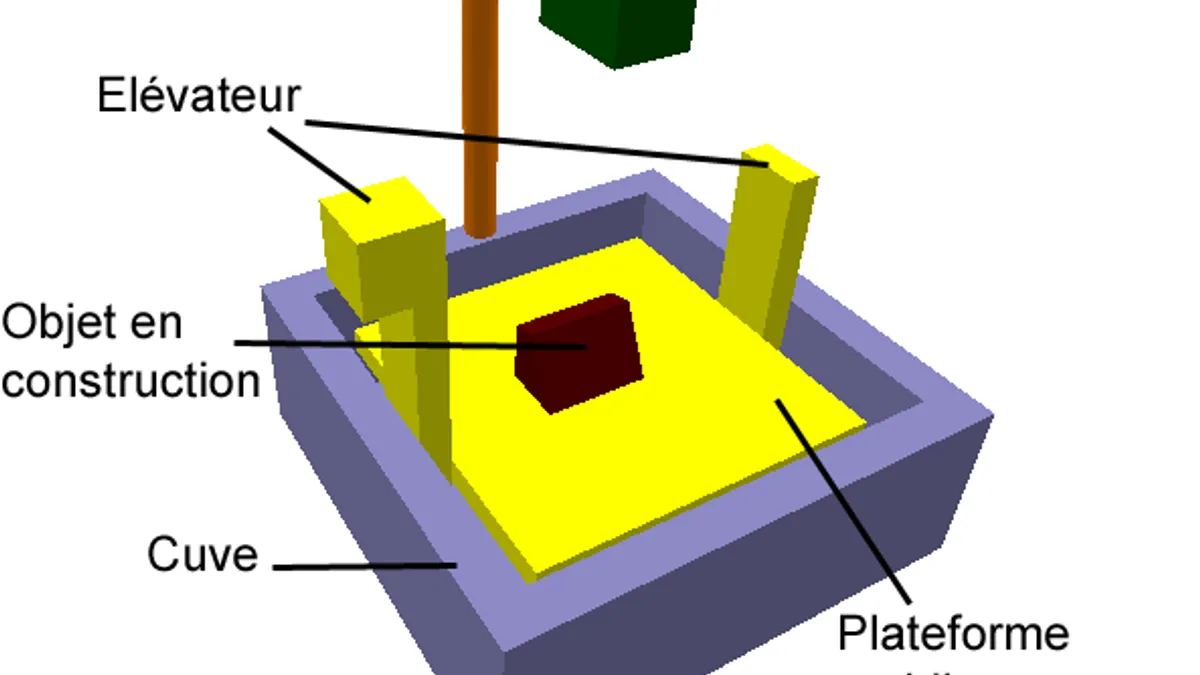
Additive Manufacturing (3D Printing) has transitioned from prototyping to large-scale industrial production. Technologies like Stereolithography (SLA) and Digital Light Processing (DLP) utilize vats of liquid photopolymer resins that instantly harden when struck by ultraviolet (UV) light. However, producing a 3D-printed part that rivals the mechanical properties of an injection-molded counterpart relies entirely on the quality and kinetics of that UV-curing reaction.
If a resin layer under-cures, the part delaminates. If it cures too violently, extreme exothermic heat causes the part to warp or crack. Optimizing these intricate photochemical reactions requires specialized thermal tools: primarily Photo-Differential Scanning Calorimetry (Photo-DSC) and Dynamic Mechanical Analysis (DMA).
The Power of Photo-DSC
A standard DSC measures heat flow as temperature changes. A Photo-DSC applies the exact same concept, but with a critical addition: it houses high-intensity UV lamps that blast the sample crucible inside the measurement cell at a controlled intensity and wavelength.
Since photopolymerization (the UV curing of the resin) is an aggressively exothermic reaction, the Photo-DSC instantly records a massive heat flow spike precisely at the moment the UV light turns on.
This allows chemists to measure:
- Reaction Speed: How fast the peak maxes out determines how long the 3D printer's laser needs to dwell on each specific voxel.
- Total Enthalpy: The total area under the peak quantifies how completely the resin cured.
- Photo-initiator Efficiency: By swapping different chemical photo-initiators, R&D can fine-tune the exact wavelength required for optimal mass-production printing.
Validating Z-Axis Isotropic Strength with DMA
A printed SLA part is built layer by individual layer. Due to this layer-by-layer nature, 3D printed parts notoriously suffer from mechanical anisotropy—meaning they are very tough horizontally (the X and Y axes) but incredibly weak and prone to splitting vertically (the Z axis, where the layers stack).
Dynamic Mechanical Analysis (DMA) is deployed to evaluate the mechanical continuity of the final, post-cured part.
Engineers print small "dog bone" test bars horizontally, and test bars vertically. They run both through the DMA, executing temperature sweeps to measure the Storage Modulus (elastic strength) across the Glass Transition (Tg) boundary.
If the Z-axis bar shows a drastically lower Storage Modulus or a wildly different Tan Delta peak compared to the X-axis bar, the engineers know the chemical bonding between the printed layers failed. They must then adjust the printer's cure times or formulate "darker" resins that allow deeper UV penetration to chemically stitch the layers together.
Case Study: Warpage in Dental Aligners
A biomedical printing facility was manufacturing clear dental aligners at scale using DLP technology. A sudden batch of aligners suffered severe dimensional warping immediately upon being ejected from the printing vat, resulting in total scrap.
Analysts subjected the raw liquid resin to Photo-DSC testing. The data revealed that the new supplier of the resin had used a slightly different monomer blend that cured much faster, releasing 30% more exothermic heat in the first 2 seconds of UV exposure. This massive burst of heat—confined within the tiny printed structure—pushed the freshly formed polymer well above its own Glass Transition Temperature, causing the plastic to soften and sag under its own weight while still in the printer. Armed with the Photo-DSC enthalpy data, the company drastically lowered the initial UV exposure intensity, slowing down the exothermic burst and eliminating the warpage completely.
TGA for Post-Processing Verification
Because SLA parts often require cleaning with isopropyl alcohol (IPA) and secondary post-curing in intense UV ovens, TGA is used as a final QA metric. Running a quick TGA mass-loss test on a finished part will instantly detect any residual IPA trapped deep inside the plastic matrix, which could compromise the part's biocompatibility or long-term strength.
Related Resources
Compare advanced SLA and DLP resin analytics using these industrial resources:
Conclusion
Additive manufacturing promises unparalleled geometric freedom, but chemistry ultimately dictates the structural bounds of that freedom. By utilizing Photo-DSC to map light-driven curing kinetics in real-time, and deploying DMA to expose isotropic weaknesses between microscopic layers, the 3D printing industry elevates its raw liquid resins into certified, manufacturing-grade polymers.
Need Expert Thermal Analysis?
Our METTLER TOLEDO-equipped lab delivers precise, NABL-traceable results for DSC, TGA, RC1, and more.
Book Free ConsultationShare Article
Related Articles
Dynamic Mechanical Analysis (DMA) in Polymer Characterization
Discover the power of Dynamic Mechanical Analysis (DMA) for measuring the viscoelastic properties, modulus, and damping capabilities of advanced polymers and composites.
InsightsDSC for Evaluating Curing Kinetics of UV-Curable Resins
Discover how Photo-DSC measures the sub-second curing reaction of UV-sensitive resins used in 3D printing, dental materials, and industrial coatings.
Thermal AnalysisThermal Analysis of Additive Manufacturing (3D Printing) Filaments
Discover how DSC and TGA ensure the printability and structural integrity of 3D printing filaments by mapping melting points, crystallinity, and thermal degradation.